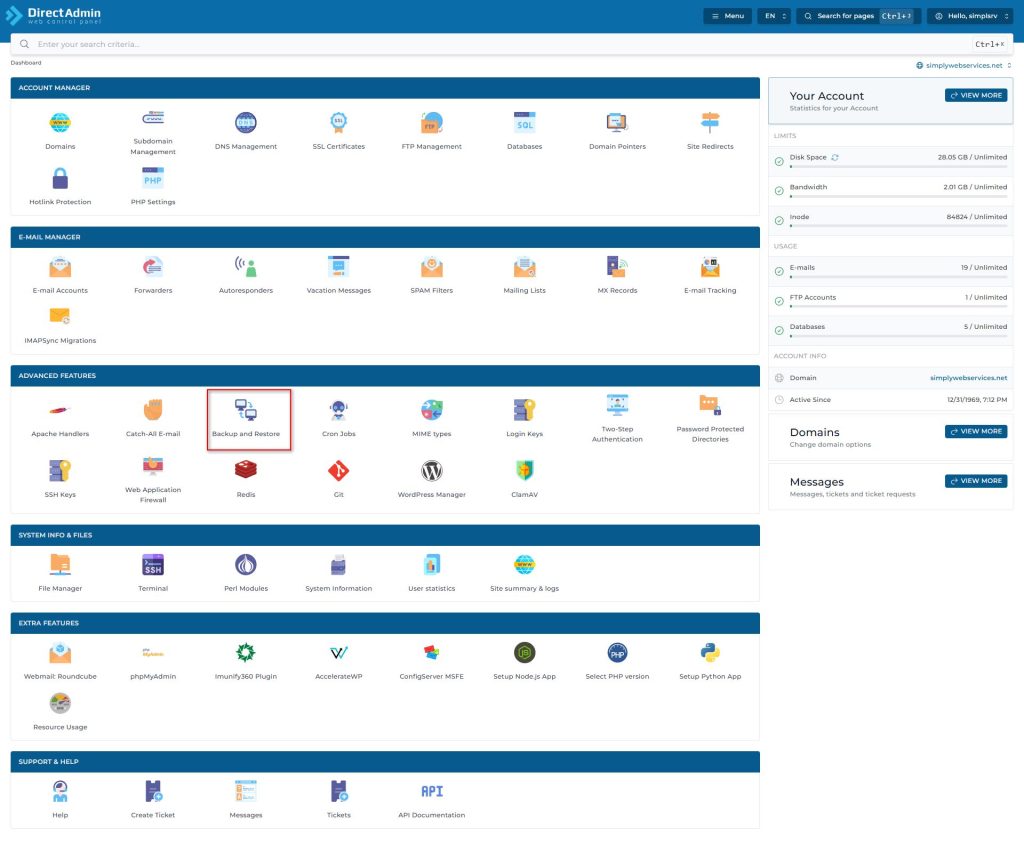
Regular backups protect your website, email, and databases from data loss due to hacking, plugin conflicts, or accidental deletion. We recommend backing up your DirectAdmin account **periodically** — and downloading a copy to your own computer for extra safety.
How to Create a Backup in DirectAdmin #
- Log in to your DirectAdmin control panel by accessing https://yourdomain:2222
- Look for the Backup and Restore option (under Advanced Features).
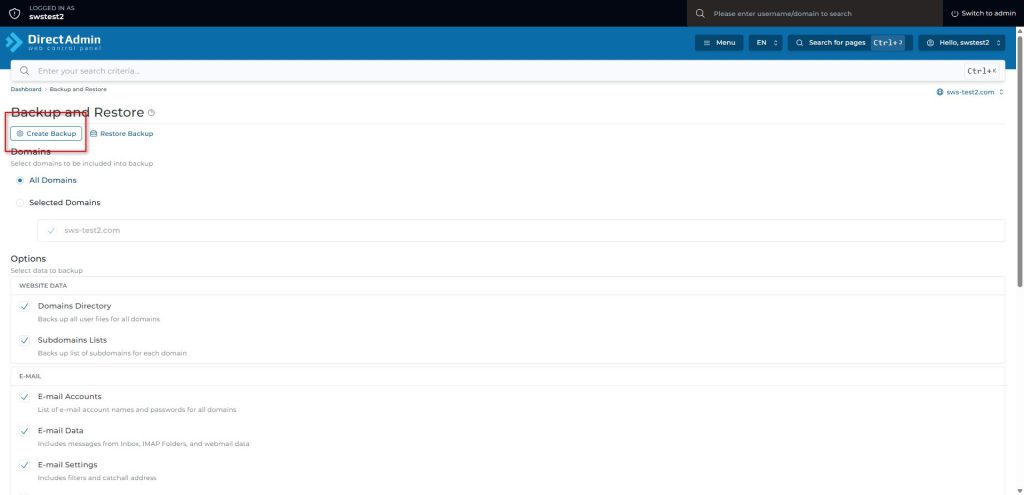
- Select the items you want to include in the backup (email accounts, email data, FTP accounts, databases, etc. — see full list below).
- Click Create Backup. You’ll see “Backup creation added to queue,” and receive a DirectAdmin Message System notification titled “Your backups are now ready“ once it’s done.
- The backup archive will appear in your domain’s `/backups/` directory (e.g., `backup-Jun-18-2026-1.tar.gz`).)
To save a copy locally: connect via FTP and download the `.tar.gz` file from `/backups/` to your computer, or use DirectAdmin’s File Manager to download it directly through your browser.
How to Restore a Backup in DirectAdmin #
Before you restore: Restoring a backup will overwrite existing data for > the items you select. If you’re unsure, create a fresh backup first so you > can roll back if needed.
- Log in to your DirectAdmin control panel by accessing https://yourdomain:2222
- Look for the Backup and Restore option (under Advanced Features)
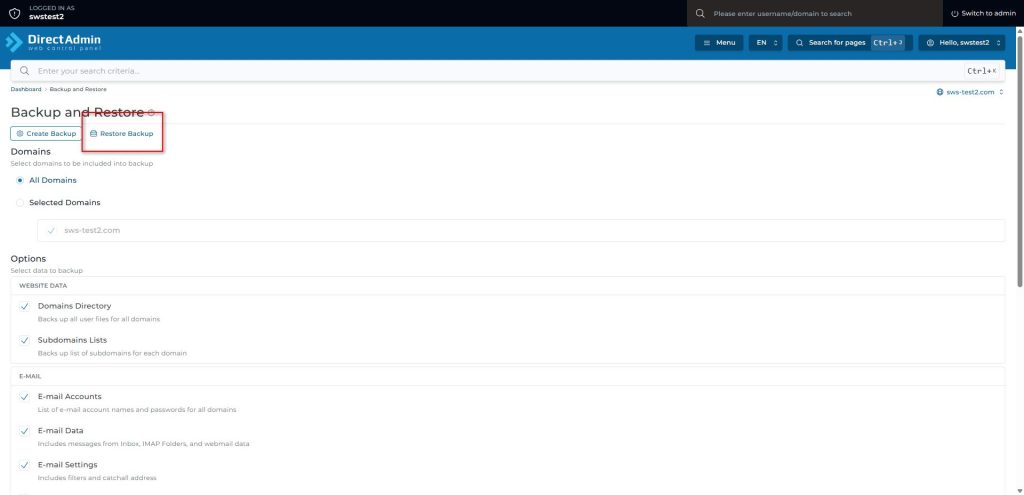
- Click the Restore Backup button (upper right corner)
- Select a backup archive from the drop-down list
- Click the Select Restore button
- Select the things you want to restore (like email accounts, email data, etc)
- Click the Restore button. When done, you will see a confirmation message: Restore Complete
What Gets Backed Up / Restored #
Website Data
- Domains Directory: Backs up all user files for all domains
- Subdomain Lists: Backs up the list of subdomains for each domain
- E-Mail Accounts: List for all domains (names and passwords)
- E-Mail Data: Includes the messages from the Inbox, IMAP Folders, and webmail data
- E-Mail Settings: Includes the filters and the catch-all address
- Forwarders: Includes all forwarding addresses
- Autoresponders: Includes all autoresponders and messages
- Vacation Messages: Includes all vacation messages and times
- Mailing Lists: Includes the list, digest-list, and archives
FTP
- FTP Accounts
- FTP Settings
Databases
- Database Settings: Backs up all DB Users and DB Settings
- Database Data: If ‘Databases’ is selected, include the actual DB data


